
Wound and Ostomy Center

Or, if you're not sure what you're looking for, you can:
Browse Specialists
Browse Primary Care
Or, if you're not sure what you're looking for, you can:
Browse All Conditions & Care Services
The Middlesex Health Wound and Ostomy Center is dedicated to successfully treating chronic, non-healing wounds and the management of ostomies.
Our goal is to improve the lives of patients by offering a comprehensive clinical program that emphasizes the preservation of our patients’ dignity and self-respect.
We take a planned, systematic approach to wound care and use a full range of services for effective wound treatment. These services are designed to ensure efficient, standardized care. But they also give us the flexibility to develop individualized treatment plans that consider all the factors that may impact how your wound heals.
We understand that each patient—and their entire team of health care providers—relies on us to provide the resources necessary to meet their health care needs. Therefore, our staff is committed to providing our community with the most current diagnostic and therapeutic approaches to wound healing.
Our specialized team of health care professionals treats many types of wounds, including:
Wound care diagnostic and therapeutic steps may include:
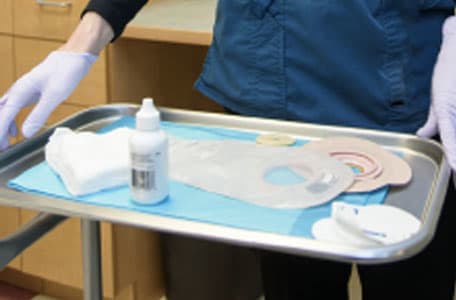
An ostomy is a surgically-created opening in the body that allows your body to eliminate waste. Ostomy surgery leads to the creation of a stoma, which is the actual end of the small or large bowel that protrudes through the opening in the abdomen.
Whether temporary or permanent, ostomy surgery (e.g. colostomy, ileostomy, urostomy, ileal conduit) results in an alteration of bodily function. Our staff are experts in the assessment and evaluation of ostomies.
Our ostomy care services include:
Our Online Learning Center also has helpful information about adjusting to life with an ostomy.
1 Specialty Care Location
For most people, wound healing is a natural process. But for some, it becomes a complex medical problem requiring specialized treatment and care. There are two sets of factors that can impede the healing process. These include local factors and systemic factors.
Examples of local factors include:
Systemic factors are those that may be affecting the patient’s entire body, including:
If you have a non-healing wound, we offer some of the most state-of-the-art treatments to help you begin the healing process.
No referral is necessary, unless your insurance plan mandates one.
You can call us directly at 860-358-2880 to set up an appointment, or you can be referred by a physician or caregiver.
At your first visit:
Please bring a list of medications that you are currently taking to the first visit.
Treatment is usually covered by most insurance companies, including Medicare and Medicaid. You can check with your insurance provider to be sure, or our staff can contact them when you visit for the first time. We will also contact your insurer for authorization.


